
The Feedback Loop Is the Engine of Coaching
By: Caroline Livesey, Sports and Life Coach.
Data Distraction
We live in a world that is increasingly driven by data. Power, heart rate, pace, training load, sleep scores, the metrics available to coaches and athletes are vast. They are useful, and in many cases extremely powerful.
However, viewing and analysing data on its own is not coaching.
Numbers tell us what happened. They do not tell us why it happened, how it felt, or what it cost the athlete to achieve it. Without context, data is incomplete. Coaching requires interpretation with the reality of a human life as the baseline. To do that a coach needs quality feedback.
The Feedback Loop Is the Engine of Coaching
At its core, effective coaching operates in a continuous loop: a plan is written, the athlete trains, the athlete reflects, communication takes place, and then the plan is adjusted accordingly. That cycle then repeats.
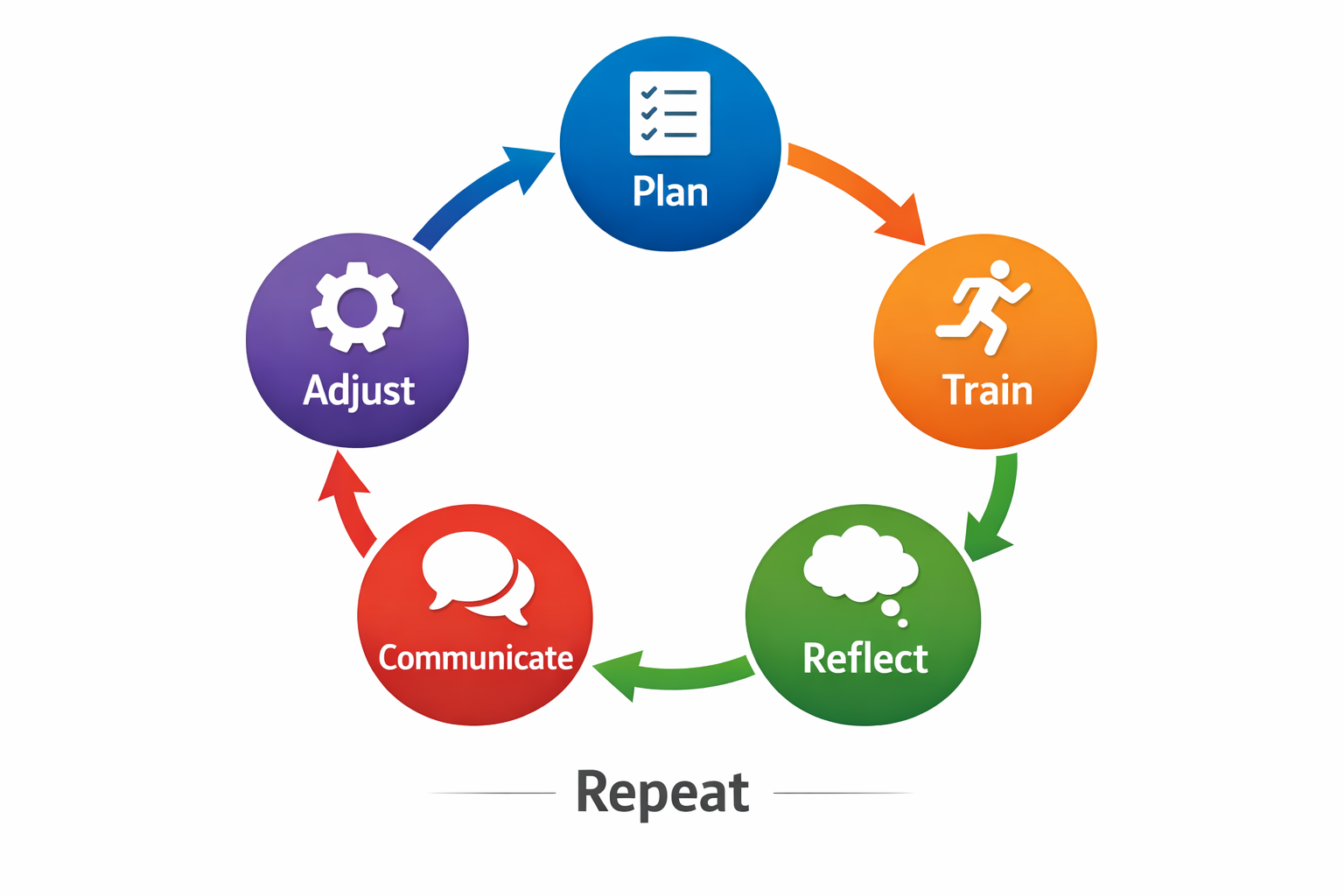
Many training platforms facilitate the planning and recording of sessions. Far fewer actively encourage structured reflection and communication.
One of the strengths of the Xhale platform is that it deliberately supports this feedback loop. It makes it structurally easy for athletes to provide feedback within each session. It notifies the coach when feedback has been added, so communication is not missed. Similarly it notifies the athlete when the coach has responded – and that conversation can continue within the session indefinitely if needed. Importantly, Xhale doesn’t allow a “data drop” , where an athlete uploads a week of data on sessions with no commentary, leaving the coach to interpret numbers in isolation. Each time data is uploaded the athlete is encouraged to leave feedback.
This structural design matters because coaching relationships weaken when communication becomes passive. When athletes upload data without reflection, assumptions increase and insight decreases. Xhale prompts reflection as part of the process, and reflection is where meaningful growth begins.
Why “Data Drop” Undermines Progress
An athlete can complete every session and hit every prescribed number while still moving steadily towards burnout.
Data does not reveal whether work has been overwhelming, whether they are under-fuelling, or whether their motivation is quietly eroding. It does not show the emotional load they may be carrying ahead of a race, or the cumulative effect of poor sleep and stress.
As coaches, we cannot programme intelligently if we do not understand the broader context. The body does not separate physical stress from emotional or professional stress. A demanding week at work can impact performance in exactly the same way as an overly aggressive training block.
This is why feedback is not optional. It is foundational.

Setting Expectations as a Coach
Athletes will only give the level of feedback that they feel is both valued and safe and some are much more willing than others.
It is important to set expectations early in the relationship. Athletes need to know that reporting fatigue is not weakness, and that acknowledging life stress is not making excuses. Information is valuable data that informs better decisions.
Coaches do not have to become therapists, and they do not have to know every detail of an athlete’s personal life. However, athletes must understand that if something outside of training is adding significant stress it will likely influence their energy, recovery and performance. That information must be shared with their coach.
If we do not know the full load an athlete is carrying, we cannot calibrate training appropriately.
Reflection Builds Better Athletes
Structured feedback does more than help the coach. It develops the athlete. When athletes consistently reflect on how sessions felt, how they slept, how they are coping with stress and how their body is responding, they build self-awareness. Over time, they become more accurate observers of their own physiology and psychology. That skill is invaluable in racing and in long-term development.
As a coach, the aim is to teach your athletes that high performance is not about rigidly executing a plan regardless of circumstances. It is about adapting intelligently to both internal and external stressors.

Closing the loop
Feedback must be acknowledged. When an athlete takes the time to provide honest input, it should be clear that it has been read and considered.
This does not mean the plan changes every time. It does mean the athlete understands that their communication influences their coaches decisions. When athletes see that their input shapes the training process, trust grows. Increased trust leads to greater honesty, and greater honesty leads to more precise programming.
That is how strong partnerships are built.
Holistic Coaching Is Not Soft Coaching
I am direct with my athletes and I expect commitment. I expect consistency and effort. However, I coach the whole person, not just the training session.
If an athlete is navigating pressure elsewhere in their life, ignoring that does not make them resilient. It makes them vulnerable to breakdown. A holistic approach raises them by acknowledging reality, and gives them support to reach their potential both in sport but also in their personal lives. The best coaching relationships are clear, collaborative and honest.
Technology should enhance this process, not replace it. The structure within Xhale supports strong feedback loops by design. It reduces silence and assumption, and it encourages reflection as part of the training process.
Ultimately, data informs us, but feedback explains the data. Conversation transforms it into intelligent action.
That is where sustainable performance is built.

About the author
Caroline Livesey is an endurance athlete, and a sports and life coach. 2 x winner of the Patagonman Extreme Triathlon and elite gravel cyclist, Caroline coaches all levels of athletes to many different types of goals. She is also co-founder of Peak Education Nepal, a charity funding education for poor children in Nepal.
If you want to know more about Caroline’s coaching then get in touch:
Caroline@trainxhale.com
Want your content featured?
If you would like to input to our Coaches’ Hub – or there is a topic you would like us to write about – why not send us your ideas? We are always looking for good content and it helps to promote your business.
Email: caroline@trainxhale.com