
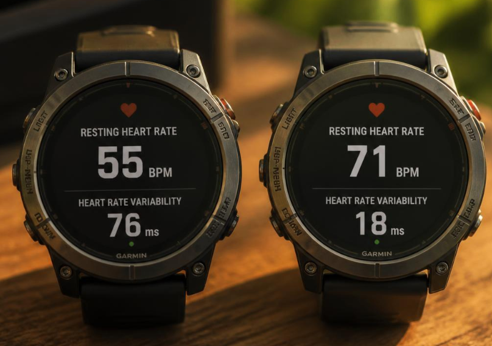
Lower resting HR. Lower exercise HR. Higher HRV. Sounds like improved fitness, right? Not always. Here’s what your wearable might be missing.
By: Paul Russhard, Resolute Run Coaching

Numbers in isolation
Training is going well; your data is certainly pointing in the right direction. Resting and exercising heart rates are dropping, and you’re seeing improvements in your heart rate variability (HRV). So why are your performances suffering? A few weeks ago, you were running a sub-20 Parkrun, but now you’re struggling to break 21 again. If you were to take the numbers in isolation, your athlete brain might tell you that you’re just not pushing hard enough… but your coach brain is telling you to take a closer look.
Always listen to your body, it is much more reliable than your data.
Getting fitter or more fatigued?
It’s well established that, as we get fitter, our resting heart rate drops and our HRV increases. This happens because:
- Blood volume expands.
- Stroke volume (the amount of blood the heart pumps in a single beat) improves.
- Energy and metabolic systems become more efficient.
- Muscles extract oxygen and clear waste products more effectively.
As a result, the heart doesn’t need to beat as fast to perform the same amount of work. The sympathetic nervous system can take more of a backseat, allowing the parasympathetic nervous system (PNS) to become more dominant, keeping everything calmer and in a more restful state.
We are familiar with fatigued athletes having persistently higher resting heart rates and low HRV, and comfortable with this state of ‘sympathetic hyperactivity’ being a marker of suboptimal recovery. It’s an easy concept to understand: when fatigue causes the autonomic balance to shift toward sympathetic dominance (chronic ‘fight or flight’), it prevents the heart from getting back down to its usual resting rate. This is a clear indicator that the athlete is fatigued, and it’s something that shouldn’t be ignored.
But there’s another scenario, one that’s sometimes under-recognised and easy to miss. The autonomic response to fatigue is more complex than just sympathetic dominance; sometimes, as athletes move into overreaching, the body shifts into a preservation mode as it senses resources are becoming scarce. As a result, resting heart rate drops, exercising heart rate drops, and HRV increases. Parasympathetic hyperactivity gets less attention, but it can also be an early sign of overreaching. The problem is that, if you rely only on wearables, the signs are identical to those that indicate improving fitness.
Fatigue Spectrum
Like almost everything in physiology, there is a spectrum: from acute fatigue to overtraining syndrome.
- Acute fatigue is the tiredness you feel from a single session.
- Functional overreaching is the deliberate state of fatigue achieved via proper training overload. You are tired, but with adequate recovery, your body will adapt appropriately and become stronger. Initially, your performance gets worse, but then, with rest, you adapt and improve. If this stage is not managed properly, you will move into the next stage.
- Non-functional overreaching prolonged overload and lack of recovery lead to fatigue and a loss of performance. At this point, the appropriate adaptations are not being made in the recovery period because the degree of stress is too much.
- Overtraining syndrome (OTS) where fatigue dominates and recovery takes weeks, months, or even years.
Misinterpreting declining performance and trying to push through, or even push harder, is a recipe for disaster and will inevitably push you or your athlete further toward the overtrained end of the spectrum.
Feedback beats data everytime
The good news is that wearable data is not the only metric we can use. In fact, it should really take more of a back seat to the athlete’s feedback and performance. A 2013 study by Le Meur et al. shows us that performance itself is a key marker when assessing for overreaching. In their study of triathletes, the overreached athletes showed:
- Lower resting and exercising heart rates
- Greater resting HRV
- A 9% reduction in performance
- Greater RPE at rest (but interestingly not on exertion)
Following a one-week taper period, the overreached athletes in this study showed hyper-improvement in performance (+7.9% of the pre-training value) compared with controls, proving that they were in the functional stages of overreaching. So, in this study, performance was the standout marker of overreaching, and wearable data alone would have given completely the wrong impression.
As always, assessing the training responses of athletes is not as simple as looking at metrics on a screen in isolation. You need to consider everything else that you have available; RPE (at rest and during exercise), performance, mood, sleep quality… the list goes on.
So what do you do with this information?
- Context is everything. No single variable can give you the whole picture. If your performances are trending downwards and RPE is trending upwards, even if your wearable data is ‘improving’ – trust your performance data first.
- Not all overreaching is a bad thing-poor management is. Functional overreaching is what we are aiming for if you recover properly and performance improves. But if you ignore the warning signs and miss recovery, you risk slipping into non-functional overreaching or even overtraining syndrome.
- Always reassess. Any physiological changes-whether they look like improvement or decline-require reassessment, so dig deeper and get the context to find out what is really going on. Fortunately, the Xhale platform actively encourages athletes to leave feedback on their data, and settings can be adjusted so that they cannot upload data without an RPE.
As coaches in this age of data reliance we need to keep informing athletes why feedback is the most important thing.
About the author
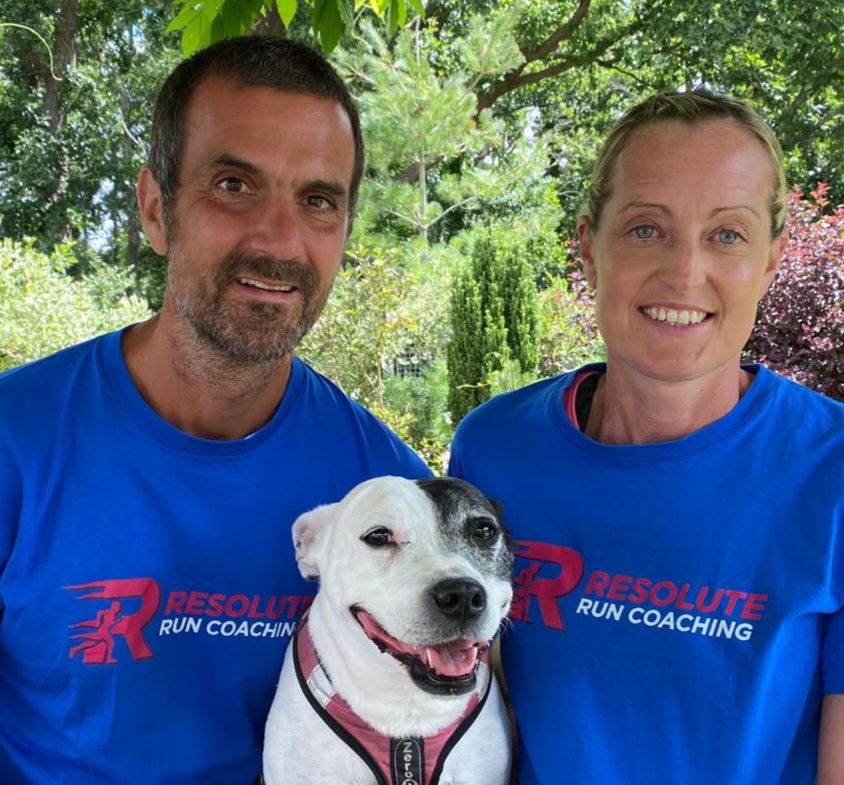
Paul is a UESCA-certified ultrarunning coach, he has Sports Science and Clinical Physiology degrees and a master’s in Cardiovascular Rehabilitation. Prior to becoming a full-time coach, he worked as a cardiac physiologist in the NHS for 20 years. Paul’s perspective is influenced by his own running journey: He has completed over 60 ultramarathons, progressing from the back of the pack to competing for podiums and wins.
As well as his physiology background, Paul draws on his own personal experience of recovering from a chronic illness and the long come back to health and fitness. This shapes his holistic coaching philosophy, which values the athlete’s health and well-being above all data. He co-runs his run coaching business with his wife, Gemma, an experienced Level 4 Personal Trainer and UESCA strength & conditioning & run coach. Together, they help athletes of all levels train with confidence and resilience through their company, Resolute Run Coaching.
Want your content featured?
If you would like to input to our Coaches’ Hub – or there is a topic you would like us to write about – why not send us your ideas? We are always looking for good content and it helps to promote your business.
Email: caroline@trainxhale.com